

Solid Copper vs. CCA Cable
Why the conductor matters, and how to tell what you are getting
Copper-clad aluminum, or CCA, is an aluminum wire with a thin copper coating. It is sold as network cable at a price solid copper cannot match, often with "Cat6" printed on the jacket. It is not category cable, it cannot carry a valid safety listing, and it does not belong in a commercial building. We do not install it.
The short version
- Category cable must have solid or stranded copper conductors. CCA does not qualify, whatever the box says.
- CCA cannot be listed as CM, CMR or CMP, so it cannot legally be installed where rated cable is required.
- Its higher resistance wastes power as heat, which is a real problem for Power over Ethernet.
- Aluminum is brittle. CCA breaks at terminations and where it is bent.
What the standards say
- Performance standard. ANSI/TIA-568, the standard that defines Cat5e, Cat6 and Cat6A, requires solid or stranded copper conductors.
- Safety standard. UL 444, the standard cable is tested to for its fire rating, requires copper conductors. CCA cable is not eligible for the listing.
- Electrical code. The National Electrical Code requires the conductors in communications cable to be copper, and requires listed cable inside buildings.
Put together: a cable made with CCA cannot honestly be called Cat6, cannot carry a real CMR or CMP rating, and should not pass an inspection. Printed markings on the jacket do not change what is inside it.
Why it fails in use
| Property | Solid copper | Copper-clad aluminum |
|---|---|---|
| Electrical resistance | Baseline | About 55 percent higher for the same size |
| Power over Ethernet | Designed for it | Extra resistance becomes heat in the cable and less power at the device |
| Maximum reliable length | Full 328 feet | Often well short of it, especially with powered devices |
| Flexing and termination | Tolerates bending and re-termination | Brittle; conductors snap at jacks and plugs |
| Corrosion | Stable | Aluminum oxidizes where the copper skin is nicked, and connections degrade |
| Safety listing | UL listed CM, CMR or CMP | Not eligible |
| Weight of a 1,000 ft box | Roughly 25 to 35 lb for Cat6 | Noticeably lighter |
The failures are rarely immediate, which is what makes CCA costly. A link works on the day it is installed. Then a camera reboots on hot afternoons, an access point drops to a lower speed, or a jack stops working after someone moves a desk. Each is a service call, and the cure is to replace the cable.
How to tell what you have
Scrape a conductor
Draw a blade along a stripped wire. Copper is copper-colored all the way through. CCA shows silver under the surface.
Weigh the box
Aluminum is about a third the weight of copper, so a box of CCA is plainly lighter than copper cable of the same length.
Read the fine print
Look for "CCA", "copper clad" or "CCAM". Be wary of cable described only as "Cat6 compatible".
Check the listing
A real UL listing has a file number on the jacket that can be looked up.
Be suspicious of the price
Copper is most of the cost of a cable. Half the going rate is not a bargain on the same product.
Test it
A certification tester measures resistance and length and shows what a visual check cannot.
What Smart Life installs
Solid bare copper cable from manufacturers we know, with the jacket rating the space requires, and the documentation to show it. On a cabling project the cable itself is a small share of the total. Labor is the larger part, and labor is what gets spent twice when the cable has to be replaced.
It does not all have to come out tomorrow. Prioritize the runs that carry power to cameras, access points and phones, the longest runs, and anything in an air-handling ceiling. We can test what is there and tell you which runs are the risk.
Common questions
Is CCA cable real Cat6?
No. The standard that defines Cat5e, Cat6 and Cat6A requires solid or stranded copper conductors. Copper-clad aluminum does not qualify, whatever is printed on the jacket.
Can CCA cable be used with Power over Ethernet?
It should not be. CCA has about 55 percent more resistance than copper of the same size, so more power is lost as heat in the cable and less reaches the device.
How can I tell if a cable is CCA?
Scrape a stripped conductor with a blade. Copper is copper-colored all the way through; CCA shows silver aluminum under a thin copper skin. A box of CCA is also noticeably lighter.
What we install in its place
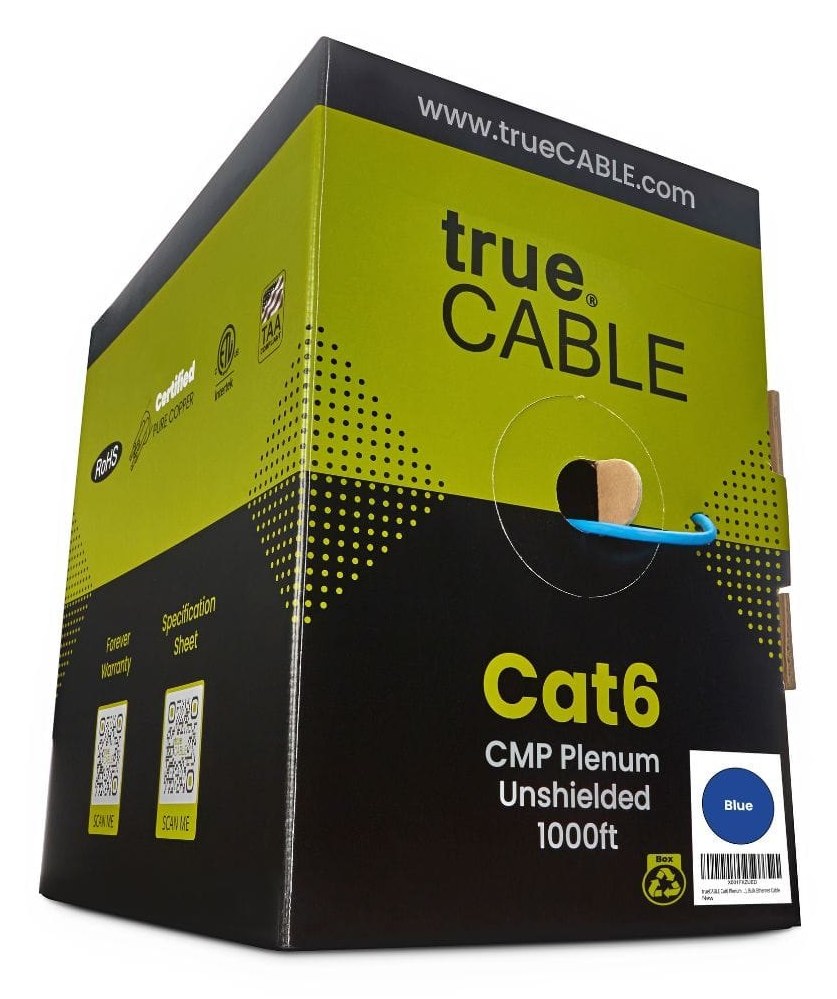
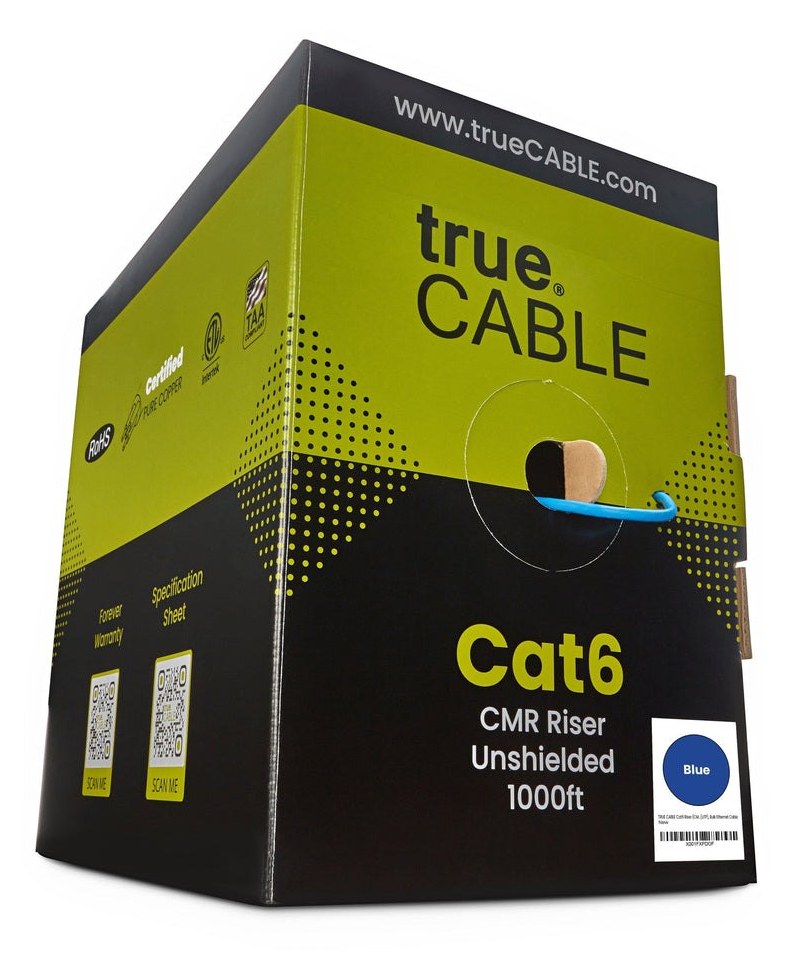
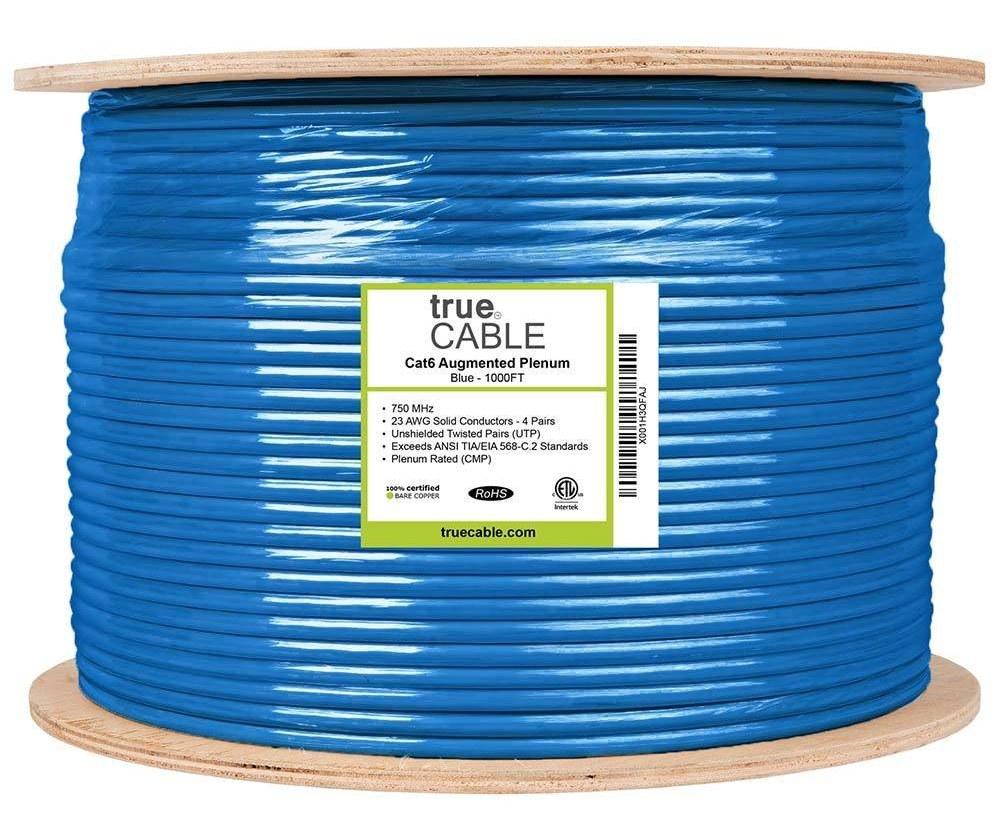
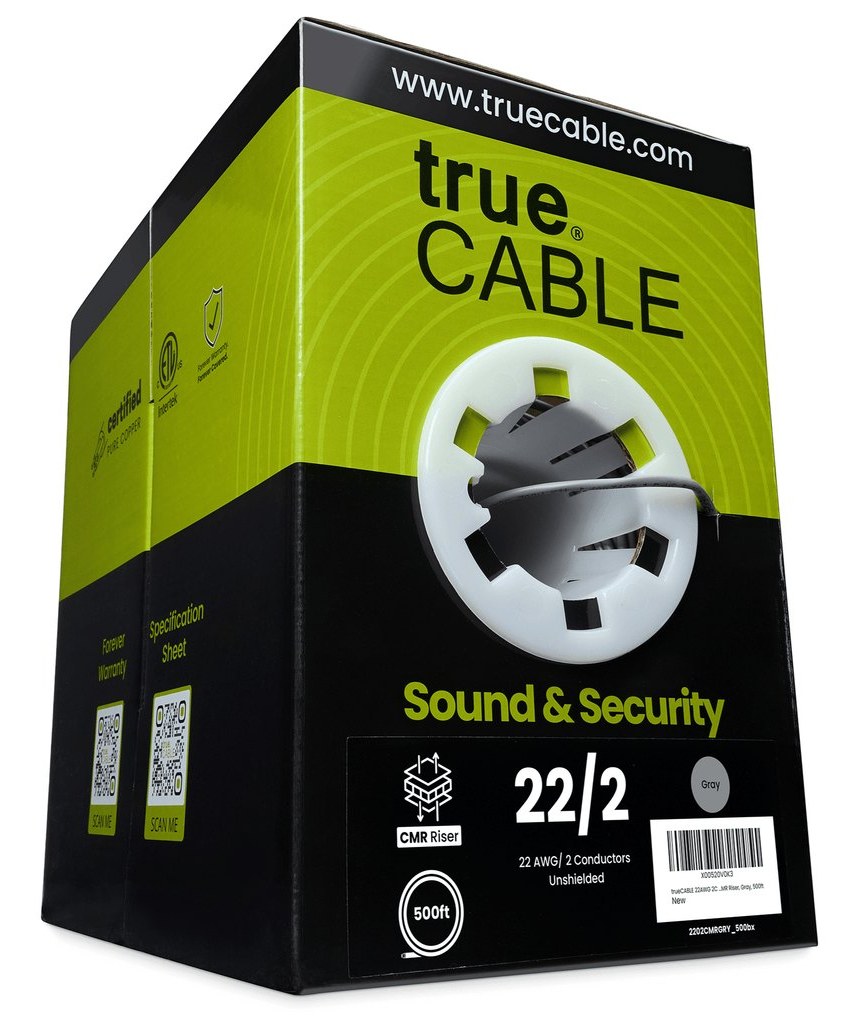
From the cable and parts we use on our own jobs. Select an item for its data sheet (PDF).
The cabling series
- Low-Voltage Cabling, Explained
- Cat6, Cat6A or Fiber?
- Solid Copper vs. CCA Cable (this article)
- Plenum vs. Riser Cable
- Power over Ethernet, Explained
- Cabling for 70-Volt Paging and Audio
Related services
See structured cabling, network installation, security camera systems.
Not sure what is in your walls? We can test the existing cable and tell you which runs are a risk and which can stay.
Talk to us about this
Tell us what you need and where the work is. We will reply with next steps, usually a short call or a visit to the building. Prefer to talk? Call (502) 251-4775, Monday to Friday, 8:00 AM to 5:00 PM ET.
Use the buttons at the top of this box to send a message, pick a time for a call, or book a site visit.
More articles
UniFi vs. Store-Bought Routers
Why a business outgrows the router from the electronics aisle
UniFi vs. store-bought routers and mesh kits (Netgear, TP-Link, Eero, Nest Wifi) for a business: separate networks, coverage, management and cost.
UniFi vs. Licensed Enterprise Networks
Where UniFi fits against Meraki, Fortinet and the rest, and where it does not
UniFi vs. licensed enterprise networking such as Cisco Meraki and Fortinet: licensing, what a lapsed license does, multi-site management, and fit.
Low-Voltage Cabling, Explained
The foundation under every system in the building
What low-voltage cabling is, why buildings are wired this way, what a structured cabling system includes, and where installations go wrong.
Plenum vs. Riser Cable
CMP, CMR and outdoor cable, and which one your building needs
CMP vs. CMR cable explained: what plenum and riser ratings mean, how to tell if your ceiling is a plenum, the substitution rule, and outdoor and burial cable.
